

It is June 2025 and Morten Tomzak Albæk, digital architect at DIN Forsyning, is looking at a deadline that is closer than it should be.
DIN Forsyning is in the middle of a migration from the aging billing system AX 2009 to Dynamics 365. Go-live is planned for the end of November.
But there is one problem: the integrations.
The integrations that tie DIN Forsyning’s many systems together, from billing and invoicing to sensors that measure the heat consumption of thousands of households, are spread across 17 different servers. And they were built in twenty different ways by different people, at different times, with different methods.
Morten knows that it can’t be moved 1-to-1 to the new system. But his small team at that time consists of himself and a single colleague. They don’t have the capacity to handle the task internally. And there are only six months until go-live.
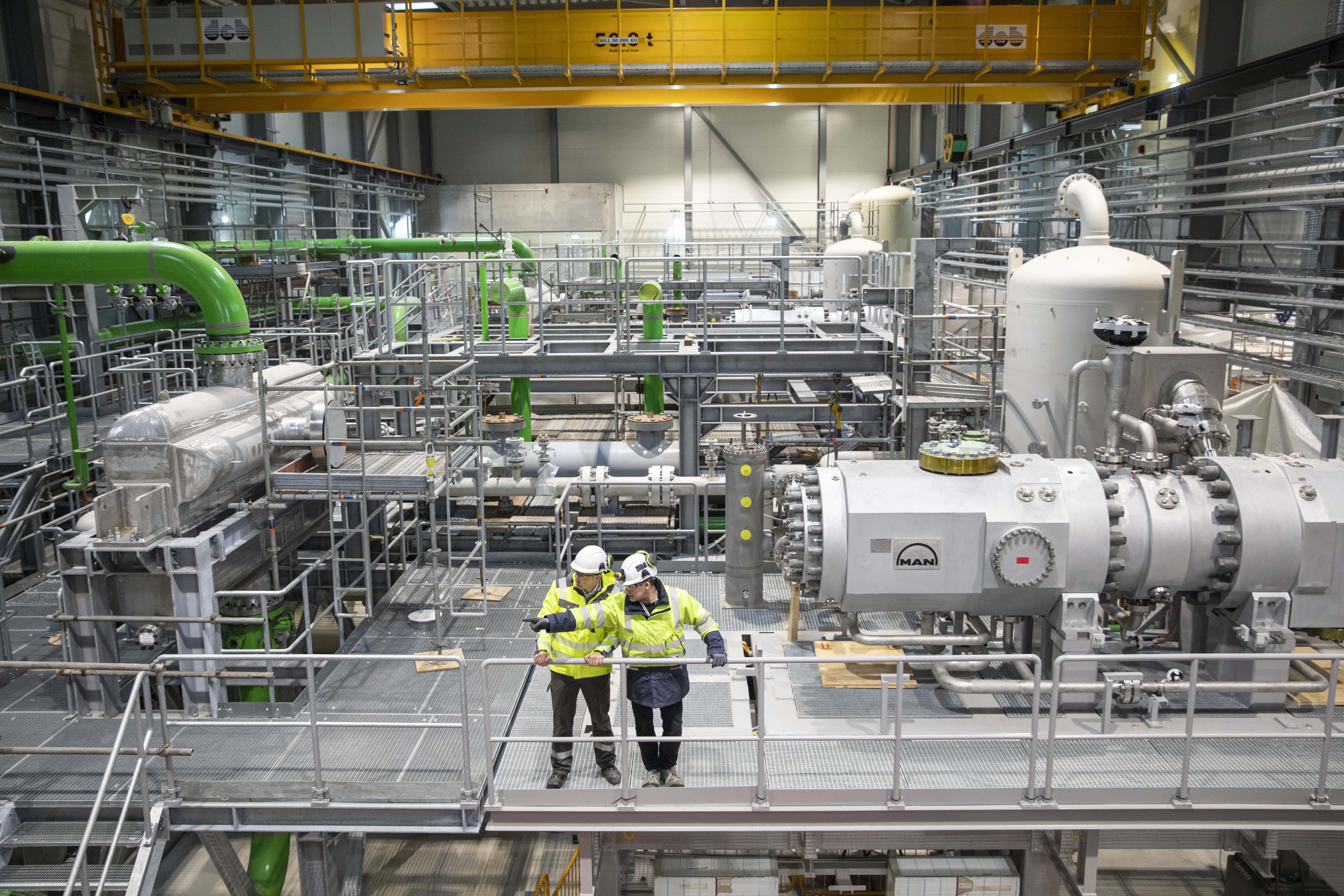
DIN Forsyning is one of Denmark’s largest utility providers, delivering drinking water, district heating, wastewater services, waste management, and recycling for citizens and businesses across the Esbjerg and Varde municipalities.
A bucket is better than a box
Morten searches for solutions within integration platforms and initially talks to one of the most obvious suppliers in the market. But the solution seems like a large and complex framework. He has doubts whether they can achieve their goals on time – and whether it is even a solution they can manage in everyday life.
But then he reaches out to valantic in Denmark (represented by VENZO and Inspari), which presents a completely different approach: A modular integration platform that runs in the customer’s own Azure environment.
It turns out to be a relatively simple setup. But easy to troubleshoot and debug. It’s manageable and yet scalable. For about half the price of the alternative.
The concept is best described as a bucket instead of a box. Many SaaS platforms offer box solutions that can do something specific, but you quickly hit limitations once you are inside the box. valantic’s platform is more open. The framework is set, and it is easy to build integrations within them, but you can also build outside and on top of them.
Exactly the solution DIN Forsyning needs.
The platform also doesn’t just monitor if something goes wrong. It can be set up with scenarios that fit the reality of the business. If an expected file doesn’t arrive, the platform can still sound the alarm. Even if it’s not technically an “error” . This makes a real difference when critical processes such as payment services depend on data actually getting through.
For DIN Forsyning, there is another crucial factor: under no circumstances do they want to be locked into one vendor.
"We had integrations spread across 17 servers, built in 20 different ways. Now we have a unified overview and a solution that we can maintain and build on ourselves. It was crucial for us that we were not locked into one vendor and that the platform was open enough to be shared across the industry."
Morten Tomzak Albæk, Digital Architect at DIN Forsyning

The big headache
The platform itself turns out to be the easy part. The big headache is getting access to the 16 systems that need to be connected. Setting up connections, network access, punching through to on-premise solutions. It requires coordination with a wide range of suppliers and takes longer than both DIN Forsyning and valantic had expected.
This contributes an important lesson, namely that it pays to get control of access before the project starts in earnest. The time the team spends at the beginning thoroughly mapping and describing all integrations turns out to be well spent.
More than just integrations
Today, DIN Forsyning has a comprehensive overview of its system landscape. When a system needs to be replaced, it can be done without changing the other end of the integration. And instead of coordinating with two or three suppliers every time something needs to be changed, DIN Forsyning now goes to one place.
The platform is already being used to prepare for another major shift, namely a migration to a new cloud-based ERP system, where virtually all integrations will be transferred to the new platform.
And DIN Forsyning is not alone. Other utilities and companies within critical infrastructure are looking at similar solutions. Because the need is the same everywhere in an industry with many systems, many suppliers, and a great need for overview and flexibility.
DOWNLOAD AND READ THE FULL CASE STORY (Only in Danish)
Download and share the story, including an overview of how VENZO contributed to the success story.